What if the key to unlocking your body’s full power is in raw foods? The idea of heat-free health shows how eating certain foods raw can be beneficial. This article explores the “5 foods better before cooking” that keep nutrients alive and boost energy. By choosing these raw foods, people can stay energised and get more nutrients in their busy lives.
As more people in the United States choose raw ingredients, knowing about these options is key. Readers will learn how to add these foods to their daily meals. This helps them live a vibrant life despite their busy schedules.
Key Takeaways
- Raw foods can retain more nutrients than cooked options.
- Understanding heat-free health can enhance energy levels.
- Incorporating raw ingredients supports a vibrant lifestyle.
- Preserving vital compounds is essential for overall health.
- Exploring the benefits of uncooked foods can lead to better dietary choices.
Understanding Raw Foods Nutrition Benefits
Raw foods nutrition benefits show how unprocessed foods work with our bodies. They help our metabolism work better. Studies say eating raw produce lets us get more phytonutrients. These nutrients change when food is cooked.
Knowing these benefits helps us stay healthy and full of energy. It’s good for those who care about their health.
The Biological Impact of Raw Consumption
Raw foods have a big impact on our bodies. Here are some ways:
- They keep enzymes that help us digest food.
- They keep vitamins and minerals that cooking can destroy.
- They help us absorb health-promoting phytonutrients more effectively.
Enhancing Natural Energy Levels
Eating raw foods can make us feel more energetic. This is because of:
- We get more nutrients from raw foods.
- Raw foods contain lots of water, which helps keep us hydrated.
- They have fibre, which helps keep our blood sugar stable.
| Raw Food | Nutritional Benefit | Cooking Impact |
|---|---|---|
| Spinach | High in iron and magnesium | Reduces nutrient levels |
| Carrots | Rich in beta-carotene | Cooking can decrease vitamin C |
| Broccoli | Contains sulforaphane | Heat diminishes its benefits |
Learning about the nutritional benefits of raw foods helps us make better food choices. Eating raw foods can improve our health and energy.
Why Heat Free Health: 5 foods better before cooking” Matters
The idea of eating “5 foods better before cooking” is key to better nutrition. Raw foods keep more nutrients than cooked ones. This way, you get the most from the natural goodness of these foods.
Choosing raw foods has many benefits:
- Preservation of Nutrients: Cooking can destroy vitamins and minerals. Eating raw helps retain these vital compounds.
- Enhanced Flavour: Raw foods often have a fresher, more vibrant taste that cooking can dull.
- Increased Energy: Many people report feeling more energetic when they consume raw foods, as they provide quick, digestible energy.
- Natural Enzymes: Raw foods contain enzymes that aid digestion and nutrient absorption.
Adding “5 foods better before cooking” to your diet is a smart nutrition move. It boosts nutrient absorption and supports a healthier lifestyle.
The Science of Nutrient Loss from Cooking
It’s important to understand how cooking affects nutrients. Cooking can make food taste better and feel softer. But, it can also reduce the nutrients in our food.
When veggies are cooked above 118°F, many important compounds start to break down. This makes them less effective and changes their nutrient content.
Thermal Degradation of Essential Compounds
Heat can damage important nutrients in food. Here are some key points to consider:
- Vitamins like Vitamin C and some B vitamins are very sensitive to heat.
- Minerals usually stay the same, but can dissolve in cooking water.
- Antioxidants, which are good for us, can decrease with high temperatures.
Preserving Molecular Integrity
To keep nutrients in your food, try these tips:
- Cook at lower temperatures when you can.
- Steam veggies instead of boiling them.
- Keep cooking time short to save nutrients.
Using these methods helps keep food’s nutrients intact. This way, you get the most health benefits from raw veggies. It’s good for your health and well-being.
Exploring Enzyme-Rich Raw Produce
Enzyme-rich raw produce is key to healthy digestion. These natural helpers break down food well. When we eat them raw, their enzymes work to aid digestion.
Cooking can kill these enzymes, making them less effective. To boost digestion, add more raw produce to your meals. This is great for better nutrient absorption and health.
Here are some enzyme-rich foods:
- Pineapple – Contains bromelain, which helps digest proteins.
- Papaya – Rich in papain, another enzyme that aids in protein digestion.
- Avocado – Provides healthy fats and enzymes that support digestion.
- Sprouts – Full of enzymes that promote nutrient absorption.
- Fermented vegetables – Such as sauerkraut- are packed with live enzymes.
Eating a variety of these foods can lead to better digestion and overall health. Including enzyme-rich raw produce in meals not only enhances flavour but also supports the body’s natural processes. For those looking to boost their health, focusing on raw options can be a game-changer.
Identifying Heat-Sensitive Vitamins and Minerals
Knowing which nutrients are affected by heat is key to staying healthy. Heat-sensitive vitamins and minerals are vital for our well-being. They can be lost during cooking, especially when exposed to high heat or water. Spotting these nutrients helps us make better food choices.
Water Soluble Nutrient Retention
Water-soluble vitamins, such as Vitamin C and B-complex vitamins, are easily lost during cooking. They can dissolve in boiling water, causing a loss of nutrients. To keep these important vitamins, try these tips:
- Steam vegetables instead of boiling them.
- Use minimal water when cooking.
- Incorporate raw vegetables into meals.
Protecting Delicate Antioxidants
Antioxidants are essential for fighting oxidative stress. Many of these are heat-sensitive. To keep them safe, follow these steps:
- Consume fruits and vegetables raw whenever possible.
- Limit cooking time to retain nutrients.
- Use low-temperature cooking methods, such as sautéing.
By focusing on heat-sensitive vitamins and minerals, we can make our meals more nutritious. These practices not only boost our health but also add to a lively lifestyle.
Comparing Raw Versus Cooked Food Profiles
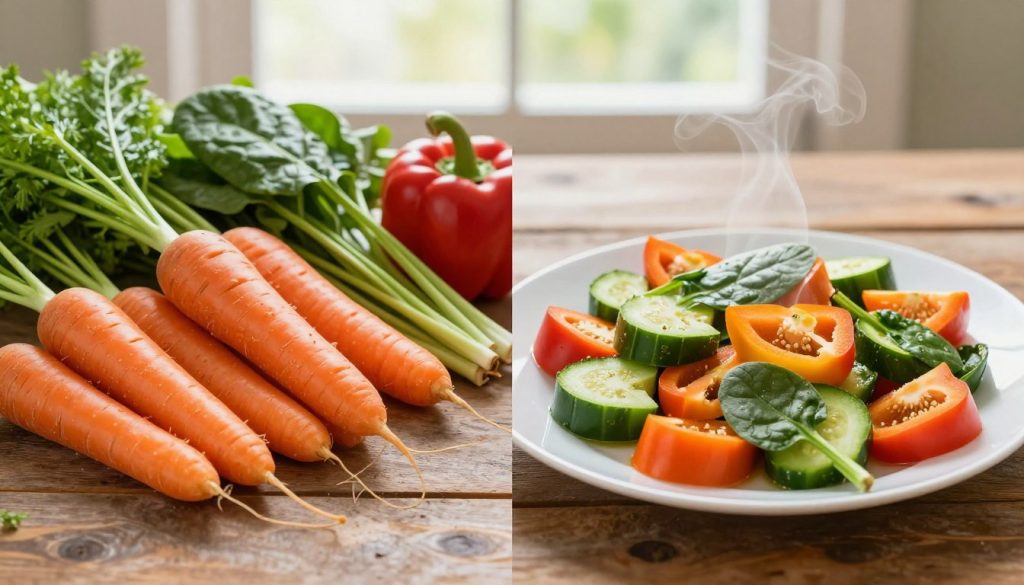
Raw and cooked foods differ significantly in taste, texture, and nutrient content. Each way of preparing food has its own advantages and disadvantages. Knowing these differences helps us make better food choices.
Raw foods retain their natural goodness, rich in vitamins, minerals, and antioxidants. Cooking can change these, sometimes making them less healthy. For example, cooking tomatoes makes lycopene easier to get, but it might lose some vitamin C.
Here are some key aspects to consider in the raw versus cooked food comparison:
- Flavour: Raw foods taste fresh and crisp. Cooking can deepen flavours but might hide some natural flavours.
- Texture: Raw fruits and veggies are crunchy. Cooking makes them softer and easier to chew.
- Nutritional Density: Raw foods are packed with nutrients. Cooking can make some nutrients, like water-soluble vitamins, disappear.
Mixing raw and cooked foods in your diet is a smart move. A balanced diet might include:
- Fresh salads with raw veggies.
- Cooked grains or legumes for extra fibre.
- Steamed or roasted veggies to bring out flavours.
Understanding the differences between raw and cooked foods helps us make better meals. Mixing both ways lets us enjoy a diet that’s both tasty and healthy.
| Aspect | Raw Foods | Cooked Foods |
|---|---|---|
| Flavor | Fresh and crisp | Deep and rich |
| Texture | Crunchy | Softened |
| Nutritional Density | Higher in vitamins and enzymes | May lose some nutrients |
Best Foods to Eat Raw for Vitality
Finding the best raw foods is key to boosting vitality and health. By choosing “5 foods better before cooking”, you get more nutrients. This way, you enjoy fresh produce and stay healthy for longer.
Selecting Optimal Fresh Ingredients
Picking the right fresh ingredients is vital for health. Here are some top picks:
- Leafy Greens: Spinach and kale are full of vitamins.
- Fruits: Berries, apples, and bananas give natural sugars and antioxidants.
- Vegetables: Carrots and bell peppers are rich in vitamins and minerals.
- Nuts and Seeds: Almonds and chia seeds offer healthy fats and protein.
Seasonal Produce Selection Strategies
Using seasonal produce makes meals taste better and are more nutritious. Here’s how:
- Go to local farmers’ markets for the freshest produce.
- Pick fruits and veggies in season for the best taste.
- Try different varieties to keep your meals interesting.
By choosing “5 foods better before cooking”, you make choices that increase energy and health. These changes in the kitchen can make your life more vibrant.
How Cooking Destroys Nutrients
Cooking can harm nutrients in several ways. High heat can break down vitamins and minerals in food. This often results in a big loss of good stuff, like in veggies. Studies show that methods like frying or boiling can cut nutrient levels by up to 50% in some greens and cruciferous veggies.
It’s key to understand how cooking affects nutrient levels to make better food choices. Several factors play a role in nutrient loss:
- Oxidation: Heat can cause oxidation, which breaks down vitamins.
- Thermal Stress: High temperatures can damage the molecular structure of nutrients.
- Water Solubility: Cooking methods that use water can leach out vitamins, like B vitamins and vitamin C.
To show the effect of cooking on nutrient retention, look at this table:
| Food Item | Nutrient Loss (%) | Cooking Method |
|---|---|---|
| Spinach | 50% | Boiling |
| Broccoli | 30% | Steaming |
| Carrots | 25% | Roasting |
| Bell Peppers | 40% | Stir-frying |
By understanding how cooking affects nutrient levels, we can make better dietary choices. Choosing raw or lightly cooked foods helps keep nutrients intact and boosts health benefits.
Maximising Raw Food Health Advantages
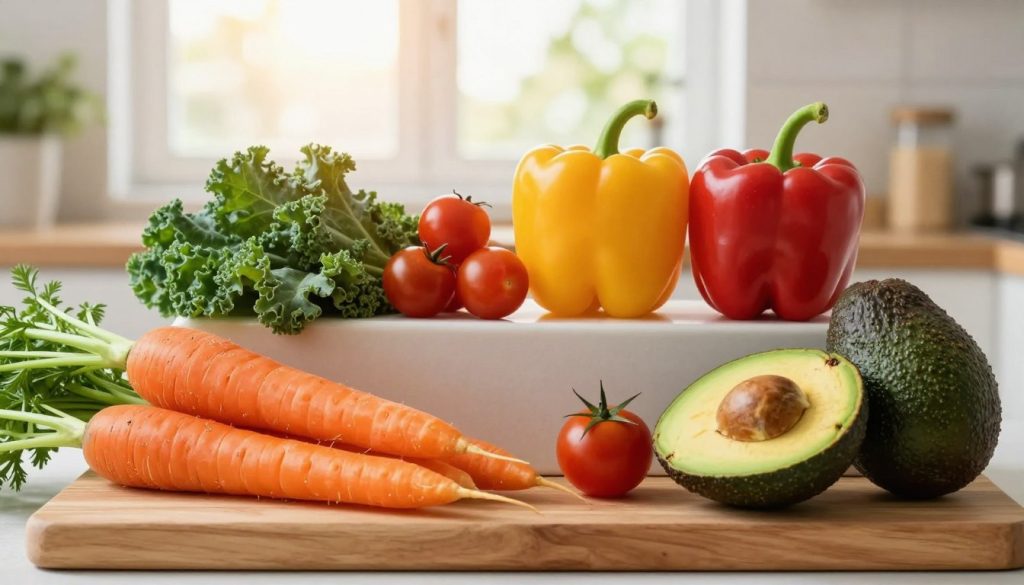
Raw food can greatly improve your health. Learning how to mix ingredients is key for better digestion and long-term health. By following “5 foods better before cooking,” you can make meals that are tasty and full of nutrients.
Digestive Health Improvements
Raw foods are easier to digest than cooked ones. They have natural enzymes that help break down food. This results in:
- Better nutrient absorption
- Reduced bloating
- Enhanced gut health
Long-Term Wellness Outcomes
Eating raw foods daily boosts long-term health. Some benefits include:
- Lower risk of chronic diseases
- Improved energy levels
- Weight management support
By focusing on raw food health, you can live a vibrant life. Using “5 foods better before cooking” helps you make better food choices.
Preparing Uncooked Vegetables: Nutrients
To get the most from uncooked vegetables, proper preparation is essential. Washing and storing them correctly is key. This helps keep their nutrients safe and their taste fresh.
Here are some practical tips for preparing uncooked vegetables:
- Wash thoroughly: Rinse vegetables under cold water to remove dirt and pesticides.
- Store properly: Keep vegetables in a cool, dry place or refrigerate to extend freshness.
- Cut just before serving: Slice vegetables right before consumption to maintain crispness and nutrients.
- Use airtight containers: Store cut vegetables in airtight containers to prevent moisture loss.
By following these steps, you can make the most of uncooked vegetables. This way, you get the best taste and nutrients right when you eat them.
Integrating Fresh Produce Into Daily Meals
Adding fresh produce to your meals is easy and fun. With the right methods, anyone can enjoy heat-free health and the “5 foods better before cooking.” This method improves taste and nutrition. It also lets you explore different textures and flavours.
Creative Raw Preparation Techniques
There are many ways to prepare raw foods that can change a meal. Here are some popular ones:
- Marinating: Soaking veggies in tasty liquids makes them even more flavorful.
- Shredding: This method gives a light, crunchy texture, great for salads.
- Blending: Mixing fruits and veggies into smoothies is a quick way to get nutrients.
Building Balanced Raw Plates
Making balanced raw plates is key to a healthy diet. Here are some tips:
- Choose foods of different colours for a variety of nutrients.
- Add protein sources like nuts or seeds.
- Include healthy fats from avocados or olive oil.
Using the “5 foods better before cooking” guide, you can make nutritious meals. These tips not only boost your nutrition but also make eating raw food fun.
Conclusion
Embracing the “5 foods better before cooking” approach is easy to do. It helps increase daily nutrition. This method makes sure you get the most from fresh foods.
Looking into the “5 foods better before cooking” list helps you understand food better. Adding these foods to your meals can lead to healthier living. It’s a small step that can greatly improve your health.
The “5 foods better before cooking” idea is a key to better health and longer life. Making these simple changes can start you on a path to better nutrition and a more lively life.