Did you know over 50% of women will get at least one urinary tract infection in their life? Many deal with the cycle of coming back infections. These painful issues are a top reason for doctor visits.
Antibiotics are the usual treatment, but research shows a natural helper. For years, people have used cranberry products for urinary tract health. Now, science is finding out why it’s effective.
This article looks at how cranberry juice can support antibiotics. It’s important to remember this is not a replacement for medical treatment. The tart drink is meant to work alongside it.
We’ll give you the facts on how cranberry juice helps your body. You’ll learn its main benefits during treatment and recovery. We’ll also offer tips for a more natural approach to health.
Key Takeaways
- Urinary tract infections are extremely common, with many people experiencing recurrent episodes.
- Antibiotics are the primary medical treatment, but they don’t always prevent future infections.
- Cranberry contains special compounds called proanthocyanidins that help prevent bacteria from sticking to the bladder wall.
- Using cranberry juice alongside prescribed antibiotics may enhance the overall effectiveness of treatment.
- This approach is complementary and should never replace professional medical advice or prescribed medications.
- Proper dosage, timing, and choosing the right product are important for possible benefits.
- A complete strategy for urinary health includes adequate hydration and good hygiene practices.
Understanding UTIs and the Role of Antibiotics
To understand how cranberry juice helps with antibiotics, we need to know about UTIs and how doctors treat them. This knowledge helps us see why people are looking for other ways to help.
What is a Urinary Tract Infection?
A urinary tract infection (UTI) is a bacterial infection in the urinary system. This includes the kidneys, ureters, bladder, and urethra. Most infections happen in the lower part, like the bladder and urethra.
The main cause of over 80% of UTIs is Escherichia coli (E. coli). This germ is usually in the intestines but can get into the urinary tract and stick to the bladder lining.
When someone has a UTI, they might feel:
- A strong, persistent urge to urinate
- A burning sensation during urination
- Passing frequent, small amounts of urine
- Cloudy, dark, or strong-smelling urine
- Pelvic pain, mainly in women
Standard Antibiotic Treatments for UTIs
Doctors treat UTIs with antibiotics. These drugs kill the bacteria or stop them from growing. The goal is to get rid of the infection and ease symptoms fast.
Commonly Prescribed Antibiotics in the United States
Doctors pick an antibiotic based on the bacteria, patient history, and local resistance. Several are often used first.
Trimethoprim-sulfamethoxazole (Bactrim or Septra) is a common choice. Nitrofurantoin (Macrobid, Macrodantin) is used for simple bladder infections. Fosfomycin (Monurol) is sometimes given for a single dose.
The treatment usually lasts 3 to 7 days, depending on the drug and the infection.
The Growing Challenge of Antibiotic Resistance
Antibiotic resistance is a big public health problem. It happens when bacteria change and don’t respond to drugs anymore.
Using antibiotics too much or not as directed is the main cause. This lets resistant bacteria survive and spread.
For UTIs, this makes infections harder and more expensive to treat. It can cause longer illnesses, more doctor visits, and the need for stronger antibiotics.
This problem shows we need other ways to help. Using uti prevention with cranberry juice with antibiotics might make treatment better. The idea of cranberry juice and antibiotics for uti management is to make the main treatment more effective and lower the chance of it coming back, which is key in fighting resistance.
The Power of Cranberry: Key Active Components
Cranberry is known for its role in urinary tract health. It’s not just because of its acidity. It’s because of powerful phytochemicals. These compounds are key to understanding how cranberry juice benefits for UTI treatment work.
Proanthocyanidins (PACs): The Primary Defender
Proanthocyanidins, or PACs, are the main defense in cranberries. Not all PACs are the same. Cranberries have a special A-type structure that other fruits don’t.
This special structure helps prevent bacteria from sticking to the bladder and urinary tract. It’s like a non-stick surface inside your body. This stops bacteria, like E. coli, from sticking and causing infections.
This action is a first-line defense. It doesn’t kill bacteria like antibiotics do. Instead, it makes it hard for them to stick around. This is why cranberry is great for preventing and supporting UTI treatment.
Other Beneficial Compounds: Organic Acids and Antioxidants
Cranberry’s power comes from more than just PACs. Other compounds also play a big role in urinary tract health.
- Organic Acids (like Quinic Acid): These acids make urine slightly acidic. This might not be the main way they work, but it helps. They also help keep the urinary pH balanced.
- Antioxidants (including Vitamin C): Cranberries are full of antioxidants like flavonoids and vitamin C. These fight oxidative stress and inflammation. They help keep the urinary tract healthy and support the immune system during infections.
The benefit of cranberry juice for urinary tract health comes from teamwork. PACs block adhesion, organic acids affect the urine, and antioxidants reduce inflammation. This teamwork makes cranberry a great partner in wellness.
The Science of Synergy: How Cranberry Complements Antibiotics
The partnership between cranberry compounds and antibiotics is backed by science. It’s not just a myth. Together, they form a strong defense against urinary tract infections. Antibiotics kill bacteria, while cranberry juice stops them from sticking around.
This combination can lead to better treatment and quicker relief. It’s important to understand how they work together.
Disrupting Bacterial Adhesion: A First Line of Defense
Cranberry’s main strength is its ability to prevent bacteria from sticking. It has special compounds called proanthocyanidins (PACs). These compounds act like shields, preventing bacteria from attaching to the bladder and urinary tract walls.
Imagine bacteria trying to stick to a surface like Velcro. Cranberry juice makes that surface slippery. Without a grip, bacteria are washed away by urine. This makes it easier for antibiotics to target fewer bacteria.
This effect is key. It weakens the enemy before antibiotics attack.
The Difference Between Prevention and Eradication
It’s important to know the difference between preventing and eradicating infections. Cranberry juice helps in both ways, but in similar ways.
- For Prevention: Cranberry products make the bladder slippery, stopping new bacteria from sticking. This is why they’re good for people with recurring UTIs.
- For Eradication (During Active Treatment): When you have an infection, cranberry juice helps antibiotics by removing some bacteria and preventing others from sticking. This makes it easier for antibiotics to clear the infection.
In short, cranberry helps prevent new infections and aids in clearing current ones. It does this by stopping bacteria from sticking.
Enhancing Antibiotic Penetration and Efficacy
Cranberry may also make antibiotics more effective. It could help antibiotics get into bladder tissues better.
By reducing inflammation and biofilm, cranberry might clear the way for antibiotics. This lets the medicine target bacteria more directly.
“The anti-adhesive property of cranberry not only reduces colonization but may also minimize the infrastructure that protects bacterial colonies, hereby improving antimicrobial access.”
Also, cranberry’s acidity might keep the environment less friendly for bacteria. This makes antibiotics’ job easier. When considering cranberry juice and antibiotics for uti, this is a big plus.
Using both together is a smart strategy. It uses cranberry’s defense to boost the power of antibiotics.
Reviewing the Evidence: Clinical Studies on the Combination
We need to look at the real data from studies on cranberry and UTI treatments. This review helps us understand what works and what’s up for debate.
It gives us a clear view of how cranberry can help in treating and preventing UTIs.

Studies Supporting Cranberry Juice as a Treatment Adjunct
Studies on cranberry juice and antibiotics show mixed but hopeful results. Many trials found that adding cranberry to antibiotics helped.
A study in the Journal of Antimicrobial Chemotherapy showed women with UTIs got better faster with cranberry juice and antibiotics. Another study found fewer infections in the months after treatment with the combo.
Cranberry might work in two ways. It could help antibiotics fight bacteria better. It might also stop infections from coming back right after treatment.
While it’s not a cure, cranberry juice can help during an infection.
Research on Prevention of Recurrent UTIs
The strongest evidence is for preventing UTIs. Many studies focus on how cranberry juice can help women with frequent infections.
A big study in the Archives of Internal Medicine found cranberry products cut UTI recurrence by 35% in these women. Cranberry makes it hard for bacteria like E. coli to stick to the bladder.
Key findings from prevention studies include:
- Women with frequent UTIs get the most benefit, not the elderly or those with catheters.
- Drinking it every day is key to keeping the bladder healthy.
- Both juice and supplements work well if they have enough PACs.
This research shows cranberry can help prevent UTIs, reducing the need for antibiotics.
Interpreting Conflicting Results and Study Limitations
Not all studies agree, causing confusion. We need to understand why this happens.
Different types of cranberry products are a big problem. Studies use various forms with different PAC levels. This makes it hard to compare results.
Other big issues include:
- Dosage and Compliance: Some studies use too little or people don’t drink it as told.
- Study Population Diversity: Results can vary between young, healthy women and older adults with health issues.
- Measurement Challenges: It’s hard to keep studies blind because of cranberry’s taste.
Even though cranberry isn’t a cure-all, it’s a safe option for prevention. For treatment, the evidence is promising but needs more research. The main thing is to choose the right product, drink it regularly, and have realistic hopes.
Practical Guide: Canberry Juice Supporting Antibiotics Against UTIs
Using cranberry juice with antibiotics for UTIs needs clear steps. This guide helps you use cranberry juice with your antibiotics. It aims to help you fight UTIs better.
Optimal Timing: When to Drink Cranberry Juice Relative to Antibiotics
Timing is key when using cranberry juice with antibiotics. It’s best to drink cranberry juice a few hours before or after your antibiotics.
This timing helps your body absorb the medicine better. It lets each treatment work without interference.
Understanding Pharmacokinetics and Spacing
Pharmacokinetics is how drugs move in your body. Cranberry juice might affect how antibiotics work in your gut.
Drinking cranberry juice at least 2 to 3 hours before or after your antibiotics helps. This way, your body absorbs the medicine fully.
| Time of Day | Action | Purpose |
|---|---|---|
| 8:00 AM | Take prescribed antibiotic with a full glass of water. | Ensure optimal drug absorption to fight infection. |
| 11:00 AM | Drink 8 oz of pure, unsweetened cranberry juice. | Provide supportive anti-adhesion effects without interfering with the morning dose. |
| 2:00 PM | Take second antibiotic dose (if twice-daily). | Maintain consistent therapeutic drug levels. |
| 5:00 PM | Drink another serving of cranberry juice or water. | Continue hydration and supportive benefits. |
Recommended Dosage and Frequency During Active Treatment
For UTIs, drink 8 to 16 ounces (1 to 2 cups) of pure, unsweetened cranberry juice per day.
It’s better to drink it in two parts. For example, 8 ounces in the morning and 8 ounces in the evening. Always space it from your medicine.
Consistency is more important than a single large dose. Regular, modest intake helps maintain a constant level of beneficial compounds in the urinary tract, providing ongoing support to the antibiotic’s work.
If you take cranberry supplements, follow the package instructions. But for UTIs, liquid juice is better for staying hydrated.
Key Considerations for Maximizing Supportive Benefits
To use cranberry juice and antibiotics safely and effectively, remember these points:
- Hydration is Non-Negotiable: Cranberry juice helps with fluid intake, but drink lots of water too. This helps flush bacteria from your bladder.
- Complete Your Antibiotic Course: Cranberry juice is a support, not a substitute. Finish all your antibiotics, even if you feel better, to get rid of the infection and prevent resistance.
- Consult Your Healthcare Provider: Always talk to your doctor or pharmacist before adding cranberry juice. This is important if you have diabetes, a history of kidney stones, or are on blood-thinning medications like warfarin.
- Choose the Right Product: Not all cranberry drinks are the same. For the best cranberry juice for UTI treatment support, choose 100% pure, unsweetened juice or a high-quality concentrate. Avoid “cocktail” blends with lots of added sugars and little actual cranberry.
By following this guide, you can align your cranberry juice intake with your medical treatment. This creates a strong, multi-faceted approach to beating a urinary tract infection.
Choosing the Right Cranberry Product: Juice, Supplements, and Concentrates
Choosing the right cranberry product is key for UTI treatment. The market offers many options, but only some have the proanthocyanidins (PACs) needed. This guide helps you pick the best one for you.
Evaluating Cranberry Juice: From Cocktail to 100% Pure
When looking for the best cranberry juice for UTI treatment, check the label. Many drinks are labeled as “cranberry cocktail” or “cranberry juice drink.” These are often mixed with other juices and sweeteners. For the best support, choose unsweetened, 100% pure cranberry juice.
The Sugar Problem: Calories and Glycemic Impact
Sugary cocktails are a big problem. They add empty calories and can raise blood sugar. Some studies suggest too much sugar can feed bad bacteria. Pure cranberry juice is tart and low in sugar, making it a better choice for health.
Top Recommended Brands: Ocean Spray Pure, Lakewood, R.W. Knudsen
Several trusted brands offer good juices. Look for these in the natural foods aisle:
- Ocean Spray Pure 100% Juice: A widely available option that is not from concentrate and contains no added sugar.
- Lakewood Organic Pure Cranberry: This brand offers a potent, organic juice with a strong tart flavor.
- R.W. Knudsen Just Cranberry: A reliable choice that is simply cranberries, with nothing else added.
Cranberry Supplements: Pills, Capsules, and Tablets
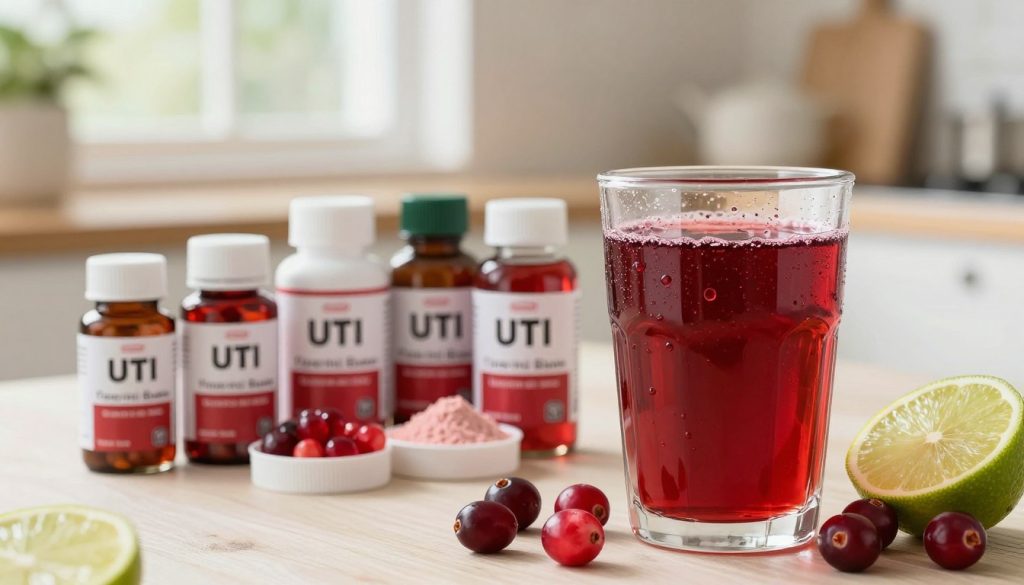
For those who dislike the tart taste or need something portable, cranberry juice supplements for UTI support are a good choice. They come as pills, capsules, or tablets. They offer convenience and a set amount of active ingredients.
How to Read Labels for Standardized PAC Content
The key to an effective supplement is its PAC content. Don’t just look for “cranberry extract.” Check the Supplement Facts panel for a standardized amount of proanthocyanidins. A quality product will state something like “36 mg PACs per serving” or “standardized to contain X% PACs.” This ensures you’re getting a consistent, therapeutic dose known to inhibit bacterial adhesion.
The Potency of Cranberry Concentrates and Extracts
Cranberry concentrates and powders are the most potent form. They are highly processed to remove water and sugar, leaving a dense source of PACs. They are ideal for those who want the benefits without the liquid volume, calories, or acidity of juice. You can mix a small amount of powder into water or a smoothie.
To help visualize the core differences between these product types, the following table provides a clear comparison:
| Product Type | Key Feature | PAC Content (Typical) | Best For | Consideration |
|---|---|---|---|---|
| 100% Pure Juice | Liquid, whole-berry form | Varies by brand & dilution | Those who prefer a natural, liquid intake | Check for “no sugar added”; can be tart |
| Supplements (Pills/Capsules) | Standardized, convenient | Often 36 mg PACs per capsule | Travel, taste sensitivity, precise dosing | Must verify PAC content on label |
| Concentrates & Powders | Highly concentrated, low sugar | Very high per serving | Maximizing potency, minimizing calories/sugar | Potent taste; follow serving size carefully |
Your final choice depends on your lifestyle, taste preferences, and health goals. Whether you choose a trusted juice brand, a standardized supplement, or a powerful concentrate, make sure it has a high, consistent dose of PACs. This is key for supporting your antibiotic therapy.
Potential Side Effects, Interactions, and Important Precautions
When using natural remedies like cranberry with medicines, safety is key. Cranberry juice and antibiotics for UTI can work well together. But knowing the risks helps use this strategy wisely. Here’s important safety info for everyone.
Known Drug Interactions with Cranberry
Cranberry products can affect how your body handles certain medicines. This might make the medicine less effective or increase side effects. Always tell your doctor about any supplements you’re taking.
The Specific Risk with Blood Thinners like Warfarin
Warfarin (Coumadin) is a blood thinner that can interact seriously with cranberry. Some studies show that too much cranberry juice or supplements can make warfarin stronger.
This could raise the risk of bleeding and bruising. It’s not clear how this happens, but it might be because of compounds in cranberry affecting how the liver breaks down the drug.
People on warfarin should avoid cranberry products or use them carefully. They should have their blood checked often.
Who Should Avoid or Use Cranberry with Caution?
Most people can safely have unsweetened cranberry juice or standard supplements. But some health conditions need extra care or a complete ban.
Individuals with a History of Kidney Stones or Diabetes
Those at risk for calcium oxalate kidney stones should be careful. Cranberries have oxalates, which can increase stone risk. Drinking lots of water is key to dilute urine.
Diabetics should avoid high-sugar cranberry juice cocktails. These can raise blood sugar levels. Pure, unsweetened juice or cranberry juice supplements for UTI support are better choices.
The table below summarizes key precautions:
| Precaution Category | Specific Concern | Recommended Action |
|---|---|---|
| Drug Interactions | Potential to increase the effect of blood thinners (e.g., warfarin), leading to higher bleeding risk. | Consult your doctor before use. Avoid if on warfarin unless closely monitored. |
| Kidney Stones | Cranberry contains oxalates, which may promote calcium oxalate stone formation. | Use with caution. Maintain high fluid intake and discuss with a urologist if you have a history of stones. |
| Diabetes Management | High sugar content in sweetened juices can disrupt blood glucose control. | Choose only unsweetened, 100% pure juice or sugar-free supplements. |
| General Use | Excessive consumption may cause mild stomach upset or diarrhea. | Stick to recommended dosages, typically 8-16 oz of juice or supplement label instructions. |
If you’re pregnant, breastfeeding, or have surgery coming up, talk to your doctor about cranberry juice supplements for UTI support. While safe for most, individual cases can differ. A quick chat with your doctor or pharmacist ensures your cranberry juice and antibiotics for UTI plan is safe and effective for you.
Addressing Common Myths and Misconceptions
Cranberry juice is popular, but myths surround it. These myths can confuse those trying to improve urinary health. It’s important to clear up these misunderstandings for safe and effective use. Knowing the facts helps your efforts to prevent UTIs with cranberry juice be based on science.
Myth: Cranberry Juice Alone Can Cure an Active UTI
This is a dangerous myth. Cranberry products are great for prevention, but they can’t treat an active UTI.
An active UTI means bacteria have already caused trouble. At this point, only antibiotics can kill the bacteria. Relying only on cranberry juice can make the infection worse, even leading to a kidney infection.
Think of cranberry juice as a guard against bacteria. But once bacteria are inside, antibiotics are needed to get rid of them.
Myth: Any Red “Cranberry” Drink is Equally Effective
Not all cranberry drinks are the same. Many red drinks are mostly sugar with a bit of juice flavor.
For real benefits in preventing UTIs, you need a drink with lots of proanthocyanidins (PACs). Sugary drinks often have little juice and might even help bacteria grow.
- 100% Pure Cranberry Juice: Tart, unsweetened, and has the most natural PACs.
- Cranberry Juice Cocktail: Often less than 30% juice, high in added sugars or corn syrup.
- Cranberry Concentrate/Extract: Very potent, used in supplements; very effective for PAC delivery.
Choosing the right product is key. You want the active compounds, not just a sweet drink.
Myth: The Benefit is Solely Due to Acidifying Urine
For years, people thought cranberry made urine more acidic to fight bacteria. But science has a different explanation.
While cranberry can slightly lower urine pH, this effect is too weak and inconsistent to be the main reason for its benefits. The main benefit is the action of PACs.
These special compounds prevent E. coli bacteria from sticking to the urinary tract. When bacteria can’t stick, they get flushed out. This is the key to preventing UTIs with cranberry juice.
Understanding this changes our view from “acidifying” to “blocking.” This is a more accurate picture of how cranberry supports urinary health alongside antibiotics.
Conclusion
Using cranberry juice with antibiotics is a smart way to fight urinary tract infections. The science shows that cranberries help prevent bacteria from sticking to the bladder wall. This makes it harder for infections to start and helps your medicine work better.
It’s important to choose a product with lots of proanthocyanidins, the active parts. Following the right timing and dosage can boost the benefits of your treatment.
Before adding cranberry juice to your treatment, talk to your doctor or pharmacist. They can check for any bad interactions with your medicine and health.
When used right, this combo can help you get better faster. It also helps keep future infections away. Adding this natural helper to your care plan is a great step towards better health.